
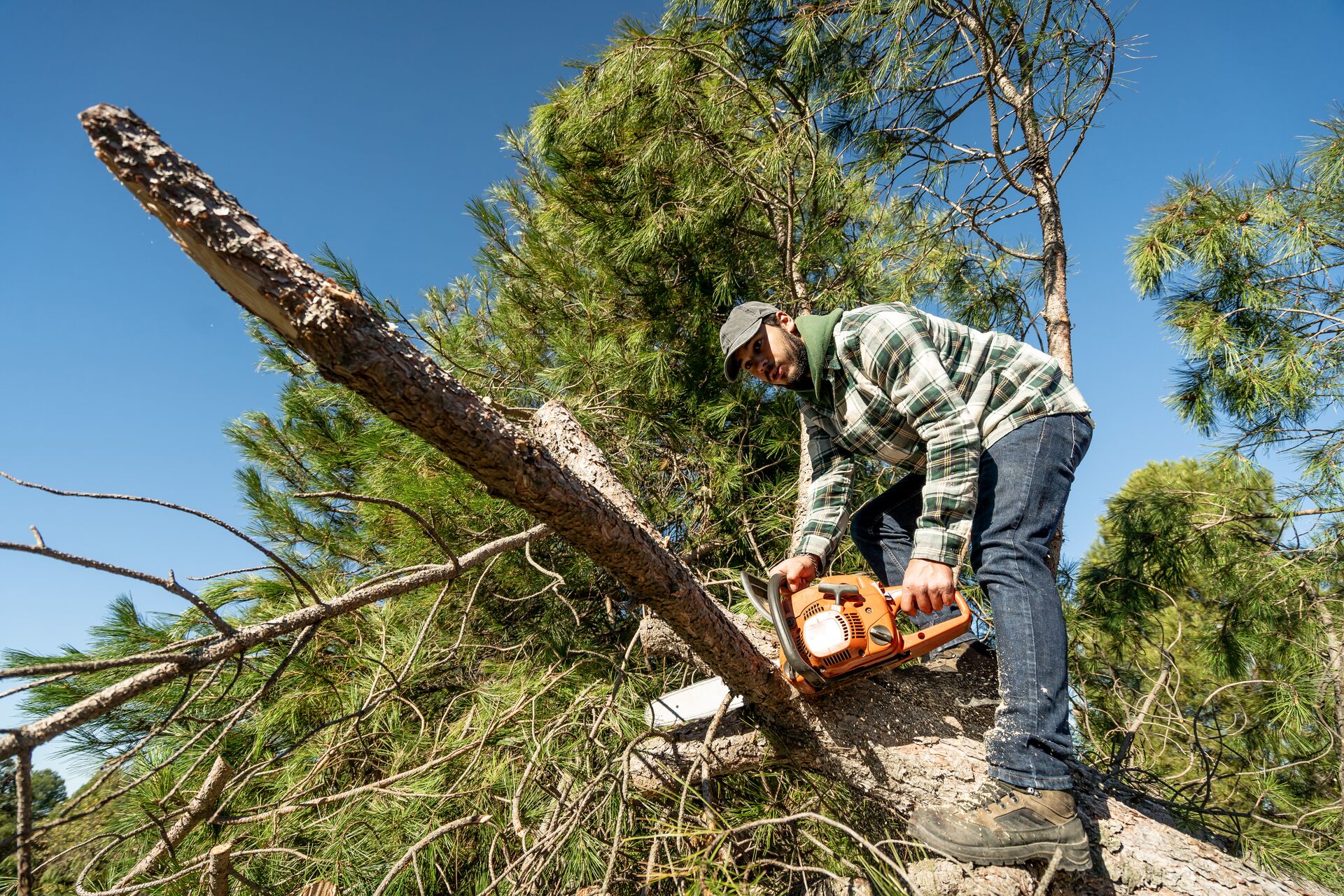
Crown Thinning
Selective limb removal for light, airflow, and storm resilience
Skilled, standards-based tree pruning across the Snoqualmie Valley and Greater Eastside. Crown thinning, deadwood removal, clearance, and structural work. No topping, ever.

Tom B.
Woodinville, WA"I have been using Haskins for pruning and cleanup on my property for three years now. They know their stuff, they are always on time, and they treat your trees like they care about them. Genuinely the best in the valley."
This request goes straight to our phone, and we'll reach out as soon as possible.
Or call us directly at 1-425-677-5573
Rated 4.8 Stars on Google
Pruning is the single most important thing you can do for the long-term health, safety, and appearance of your trees. Done right, it strengthens structure, reduces storm risk, lets more light through the canopy, and keeps fruit and ornamental trees productive year after year.
Our crew prunes to industry standards — clean cuts at the right points, never more than the tree can handle, and no topping. We work on everything from mature shade trees and conifers to fruit trees, Japanese maples, and other ornamentals.
Free estimates. Honest, no-pressure recommendations. Fully licensed and insured.
From structural pruning on young trees to careful crown reduction on full-grown firs, we handle the full range of tree care work.
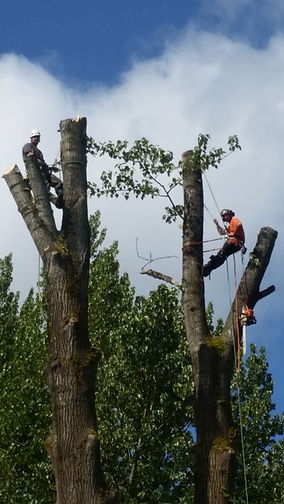
Selective limb removal for light, airflow, and storm resilience
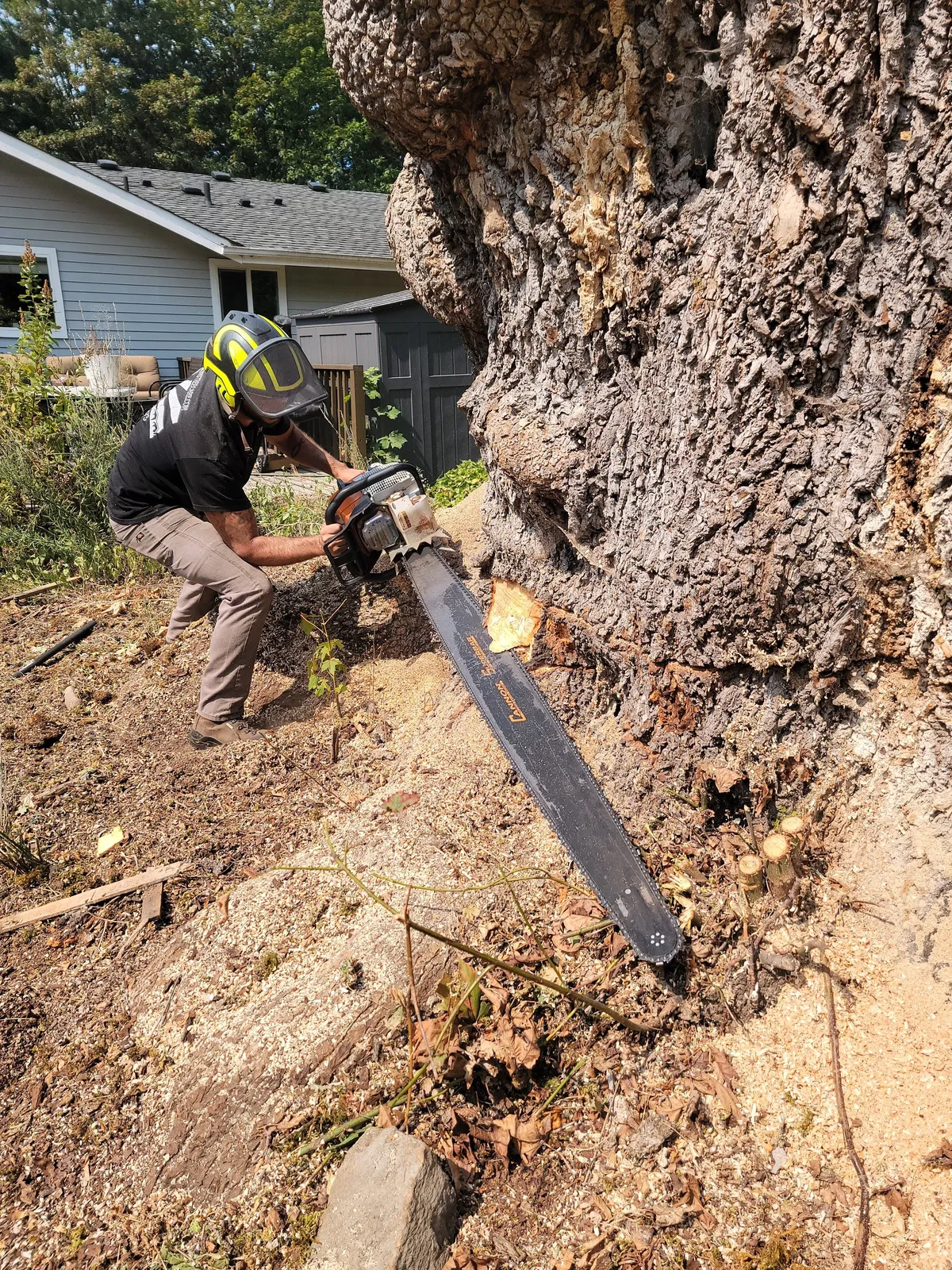
Targeted removal of dead and dying limbs before they fall
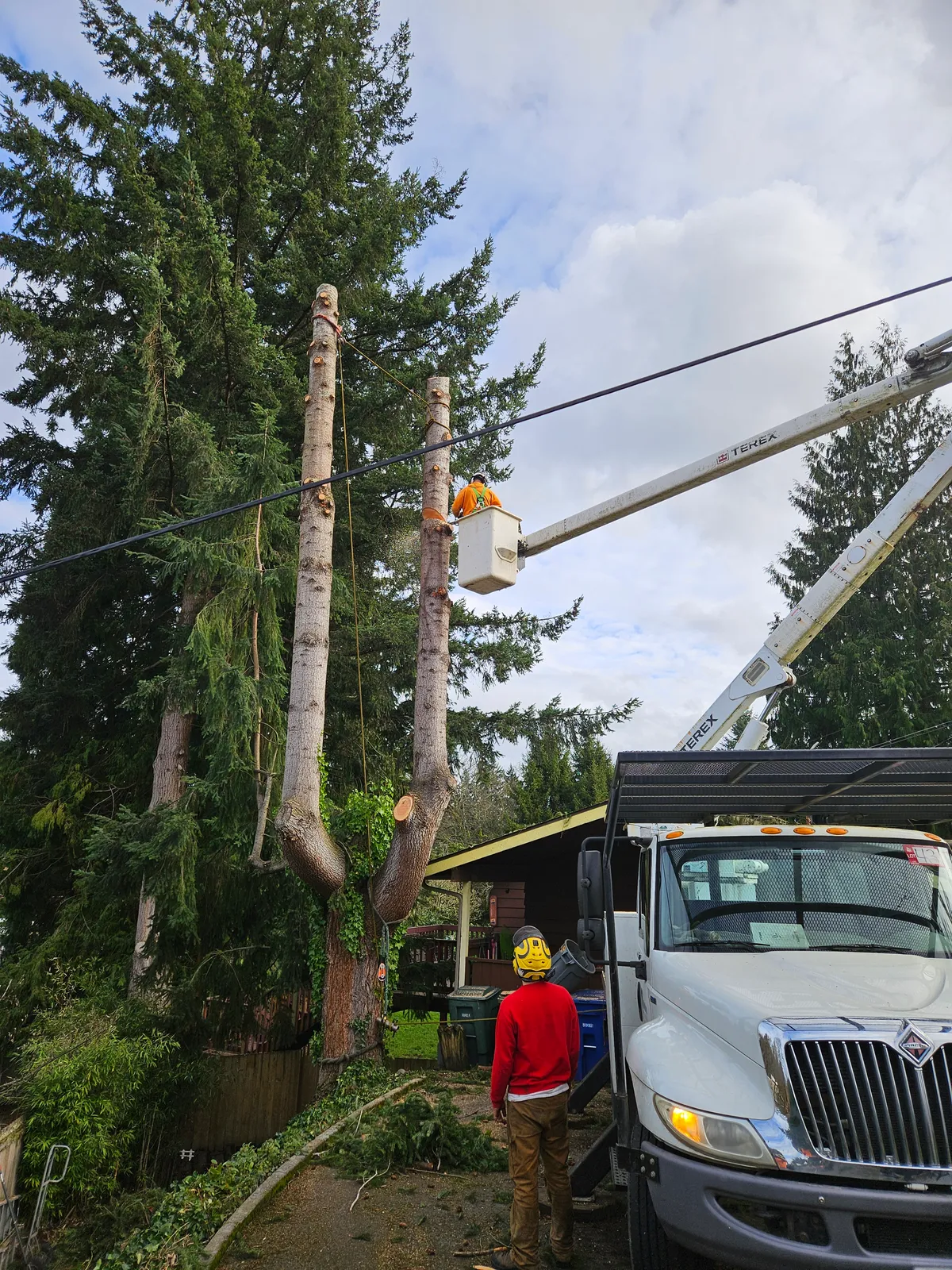
Roofs, driveways, walkways, and overhead service lines
Shaping young and mid-size trees for long-term form and strength
Lower heights, lift canopies, and open up views — without topping
Annual maintenance for maples, fruit trees, and flowering species
The right pruning window depends on the species and the goal. Here is how we think about timing across the Pacific Northwest seasons.
The dormant window
Most deciduous trees in the Pacific Northwest are pruned during dormancy. The structure is visible without leaves, cuts heal cleanly before spring growth, and disease pressure is lowest.
Light shaping & deadwood
Mid-summer is a good window for light deadwood removal, vista work, and trimming back fast-growing species. We avoid heavy cuts on heat-stressed trees.
Pre-winter prep
October through March, valley wind storms find the weak spots. A pre-winter crown thinning and deadwood pass reduces the risk of limb failure when the weather turns.
A look at recent trimming and pruning jobs across the Snoqualmie Valley and Greater Eastside.
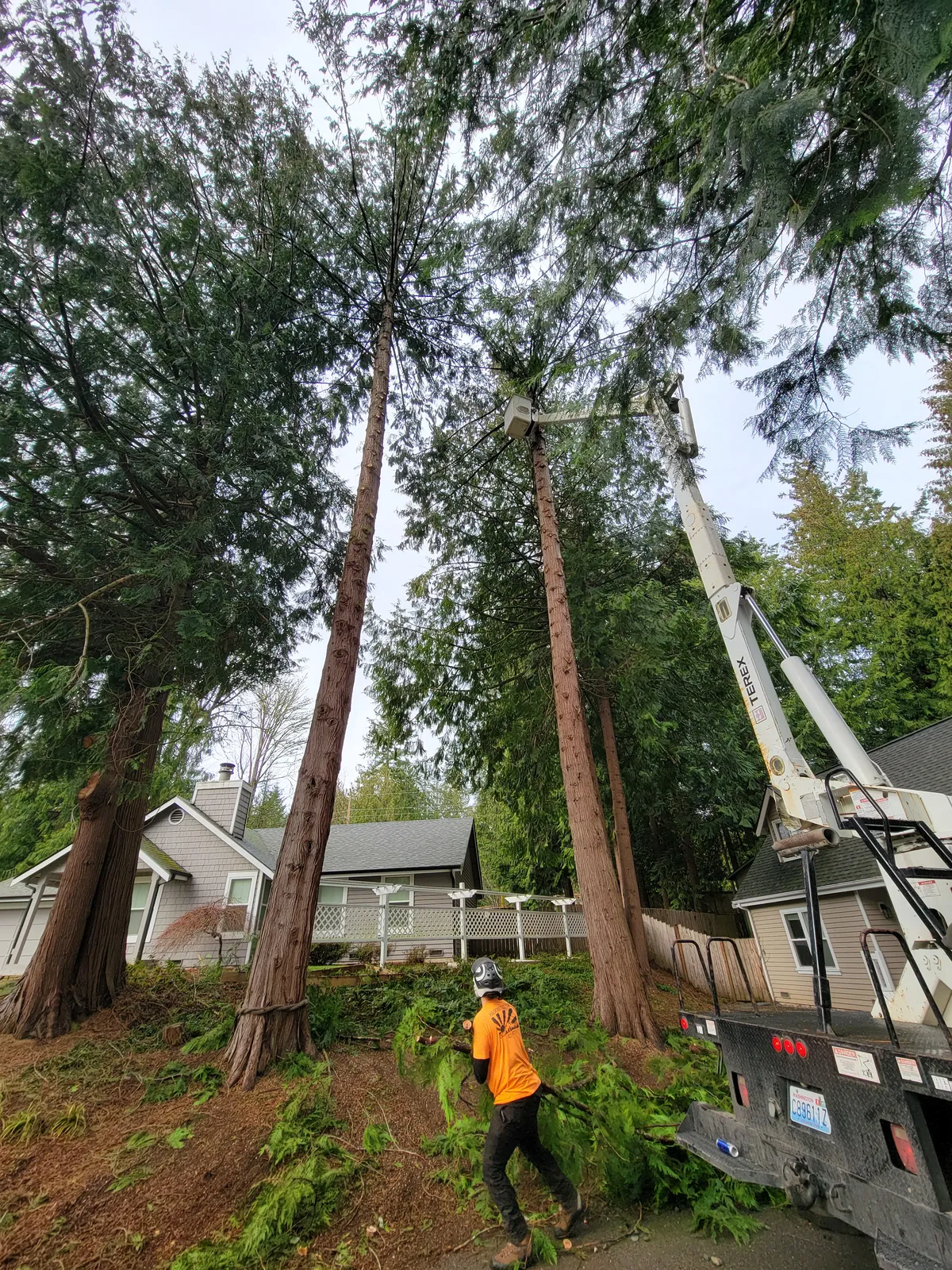
Precision cut at altitude
Snoqualmie Valley
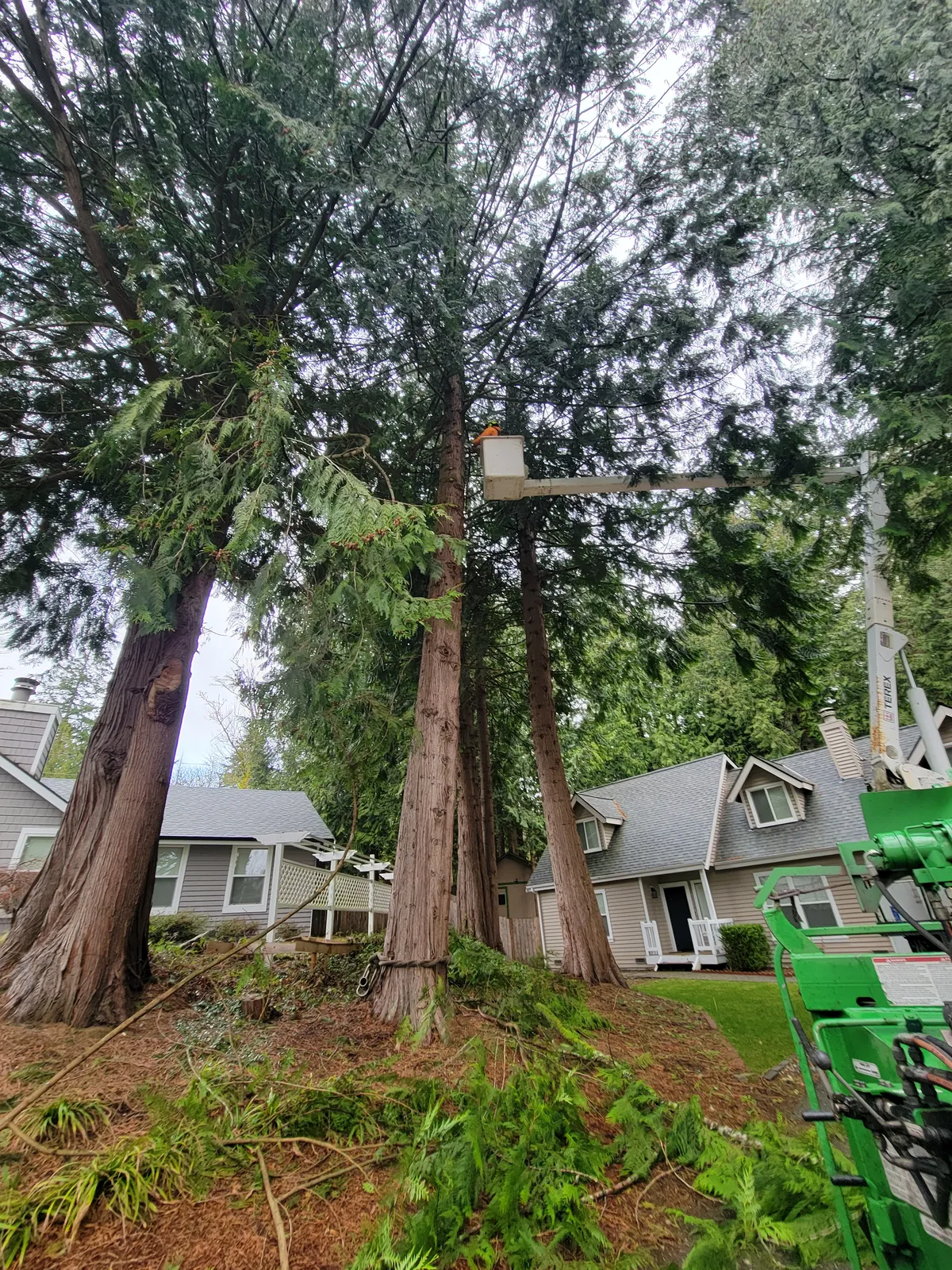
Before structural work
Redmond, WA
After structural work
Redmond, WA
On-site cleanup, every job
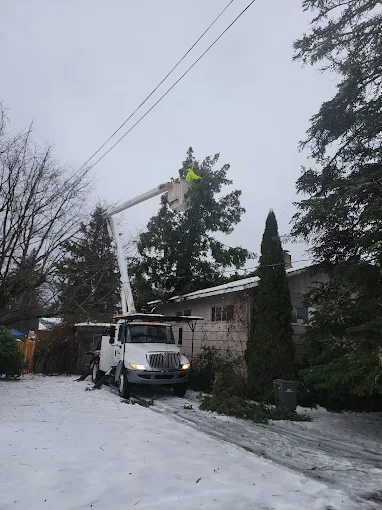
Powerline clearance
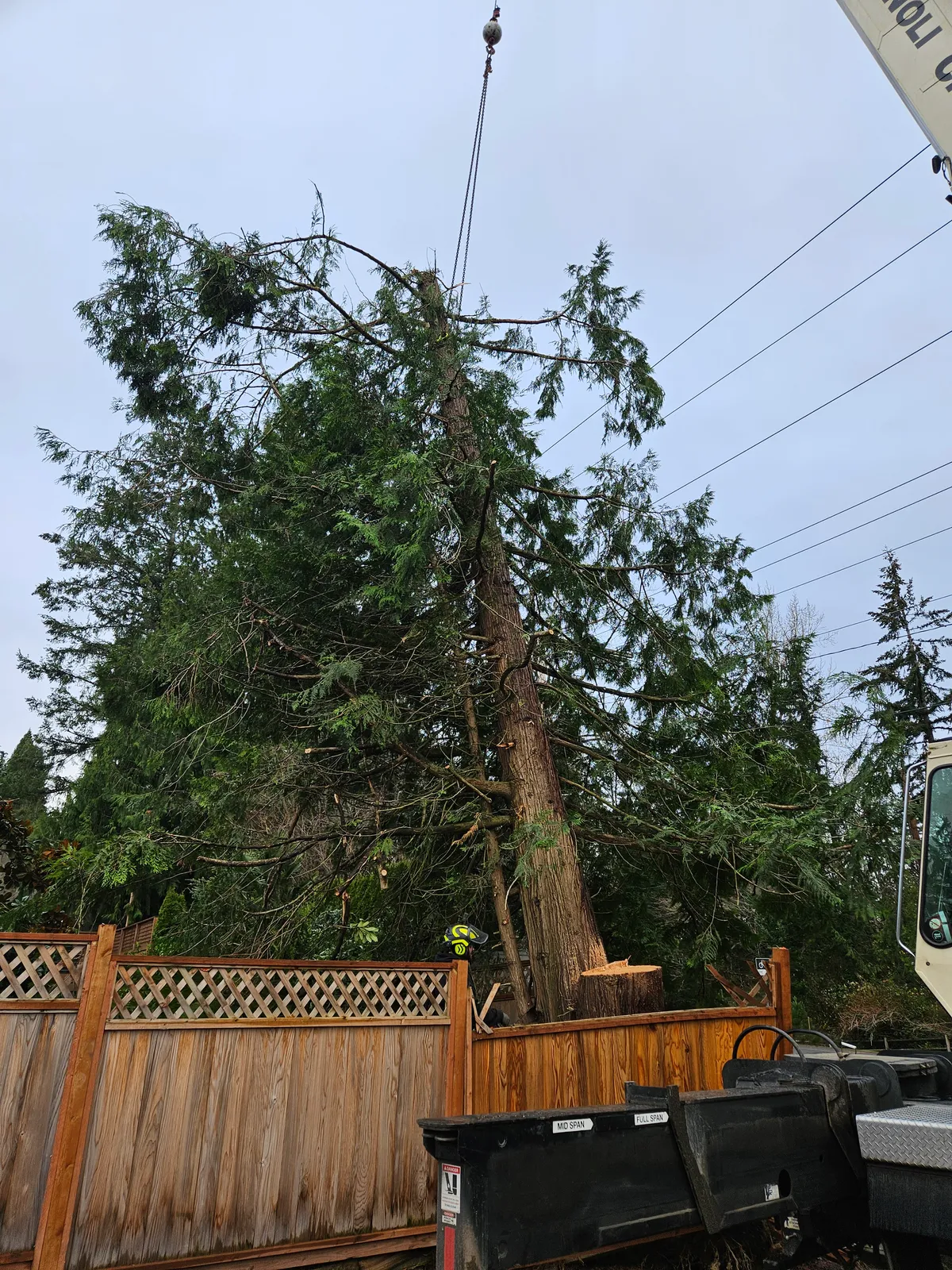
Large crown thinning
Woodinville, WA
Crown reduction, tight space
Duvall, WA
High-canopy work
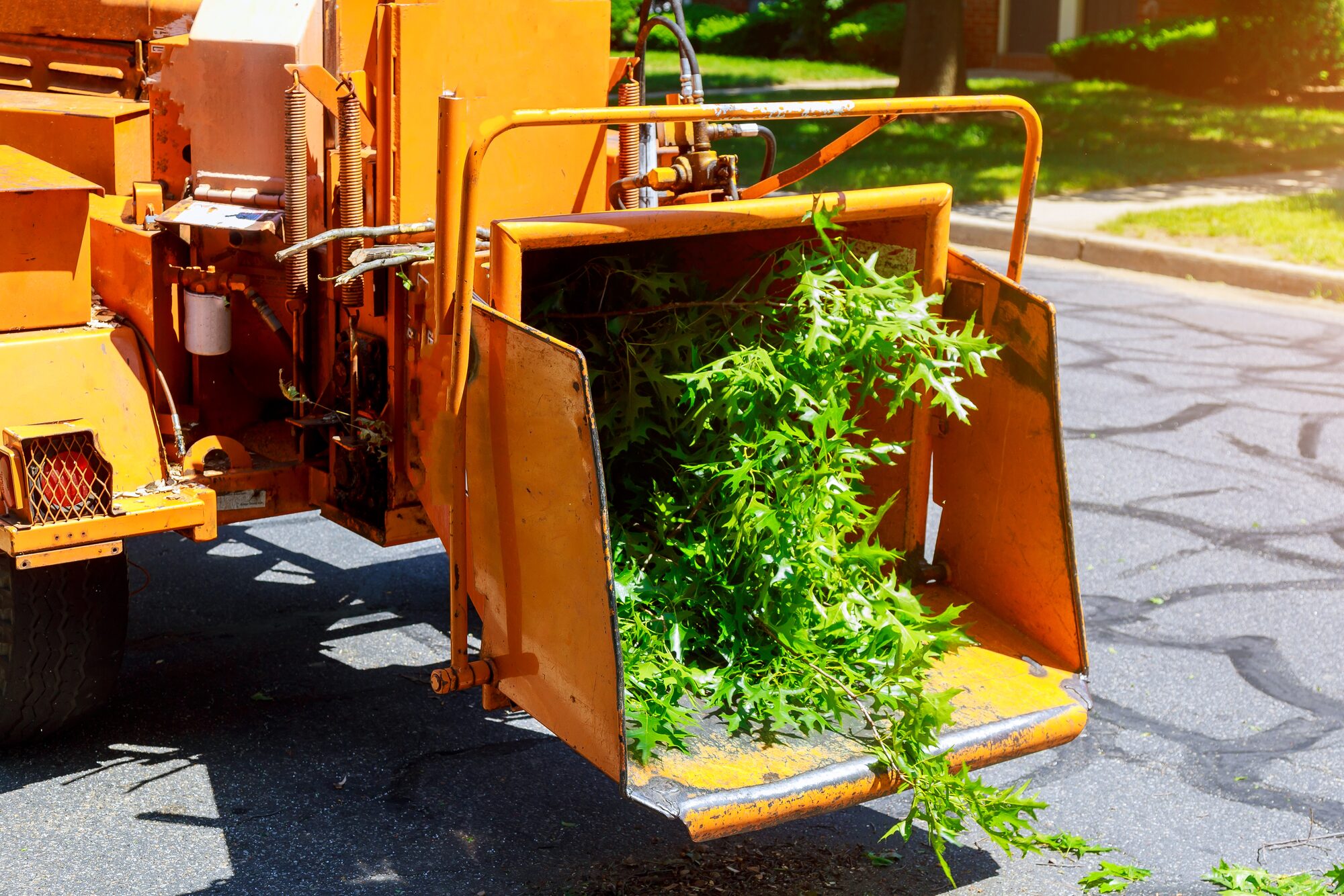
Brush chipped on site
Clean cuts, the right shape, and a yard that looks better than when we arrived.
Before After Structural pruning — Redmond, WA
Every species in the Pacific Northwest has its own pruning needs. We know what each one wants, and when.
Wide canopies take a beating from wet snow and ice loads. Regular crown thinning and deadwood removal reduces limb-failure risk before a storm finds the weak spots.
Conifers get lower-canopy clearance and selective deadwood pruning. Done right, this keeps homes and structures safe without compromising the tree.
Cedars get careful, conservative pruning — we focus on deadwood and crown cleaning, especially on trees showing top dieback.
Apple, pear, cherry, and plum benefit from annual structural pruning to keep them productive, healthy, and easy to harvest.
Japanese maples, dogwoods, magnolias, and other ornamentals are pruned with an eye for form. We respect species-specific timing and habit.
Fast-growing valley species often need clearance and hazard reduction. We assess every tree before recommending heavy work.
Pruning standards are not one-size-fits-all. Our crew works from species-specific timing and goals — never from a one-pass approach. If you have a tree you want assessed, an experienced arborist can tell you what it actually needs.
From your first call to final cleanup, we make it easy.
Give us a call or fill out our form. We will get back to you quickly to schedule an on-site assessment.
Brock walks the property, looks at the trees, and gives you an honest, no-pressure quote and a recommended pruning approach.
Our crew uses proper pruning cuts, ANSI A300-aligned techniques, and the right gear. No topping. Ever.
All brush chipped, debris hauled, yard raked clean. Your trees look better, and your property looks better than when we arrived.
The most common questions we get about pruning.
Call us today or fill out our form for a free, no-obligation estimate.