
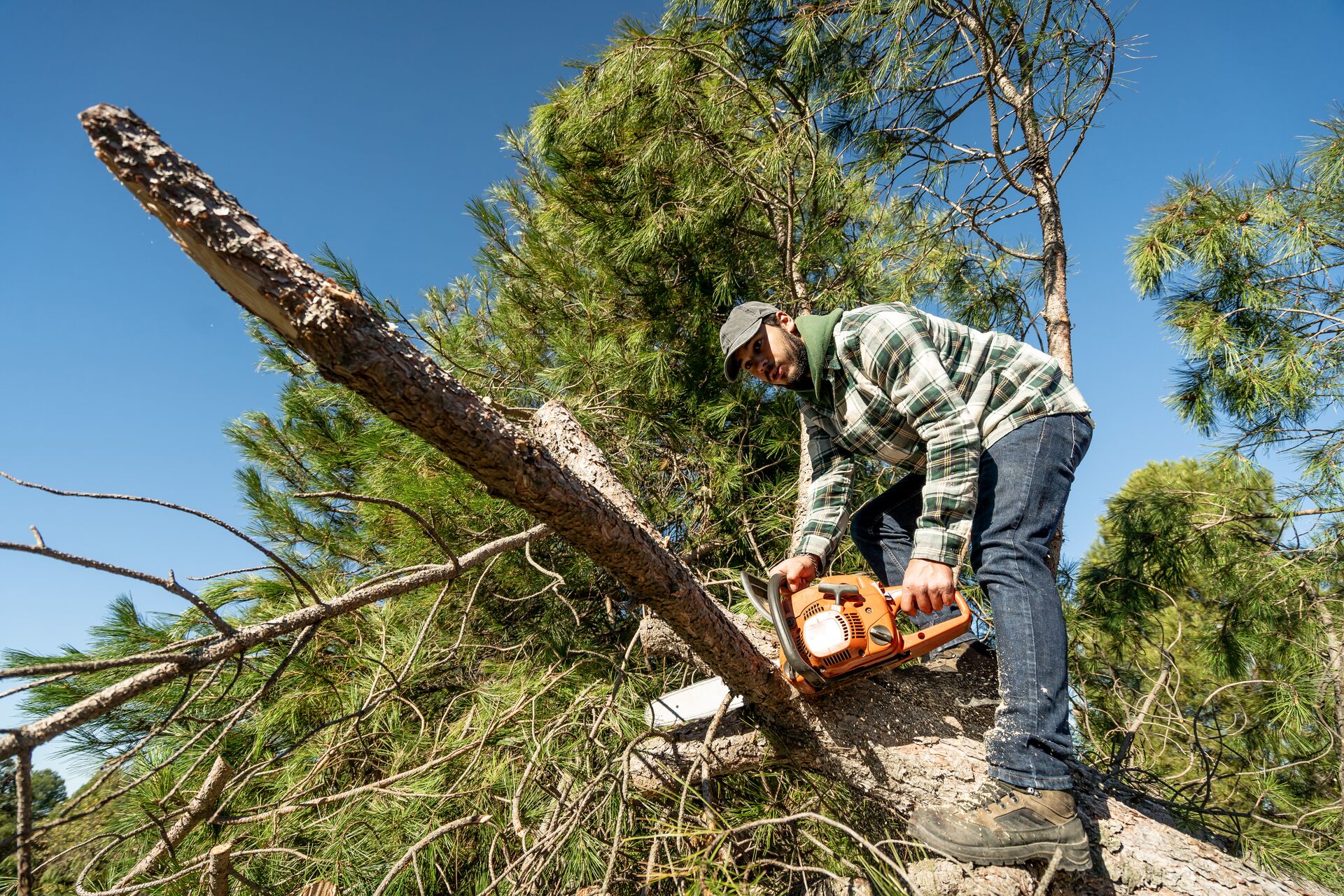
Leaning Trees
Sudden lean, gradual lean, or new lean after a storm
Leaning trees, cracked trunks, storm damage, and trees on structures — handled fast and safely across the Snoqualmie Valley and Greater Eastside. Available 24 hours a day, 7 days a week.

Sarah L.
Duvall, WA"We had a big storm come through and a fir tree came down on our driveway. Called Haskins at 9 at night and they had someone out first thing in the morning. Honest pricing, great crew. Highly recommend."
This request goes straight to our phone, and we'll reach out as soon as possible.
Or call us directly at 1-425-677-5573
Active Hazard?
Call our 24-hour line — 1-425-677-5573
Rated 4.8 Stars on Google
Leaning trees, cracked trunks, and storm-damaged limbs are serious safety risks. They threaten homes, vehicles, power lines, and the people who live near them — and the longer they stand, the higher the risk.
Our crew responds quickly to assess and remove hazardous trees before they cause damage. Whether the tree is showing warning signs and you want it down on your schedule, or it has already fallen and you need it cleared right now, we handle it.
Available 24 hours a day, 7 days a week. Fully licensed and insured. Honest, no-pressure assessments.
If your tree shows any of these signs, it is worth an assessment. Most hazard trees give warning before they fail — you just have to know what to look for.
Sign #1
A tree that suddenly starts leaning — especially with disturbed soil at the base — is a high-risk situation. Get it assessed right away.
Sign #2
Cracks running up the trunk, splits at a fork, or visible decay are structural failure points. They often precede full collapse.
Sign #3
Fungal fruiting bodies on the trunk or at the root flare are a sign of internal rot. The wood inside may not be sound.
Sign #4
Bare tops, yellowing canopies, or large dead limbs in the upper crown indicate a tree in decline. Watch closely or remove proactively.
Sign #5
Broken branches lodged in the canopy after a storm — "hangers" — can fall at any time. Treat them as active hazards.
Sign #6
Lifted soil, exposed roots, or root decay compromise the anchor that holds the entire tree upright.
From standing hazard trees to active emergencies, our crew has the equipment and the experience to bring them down safely.
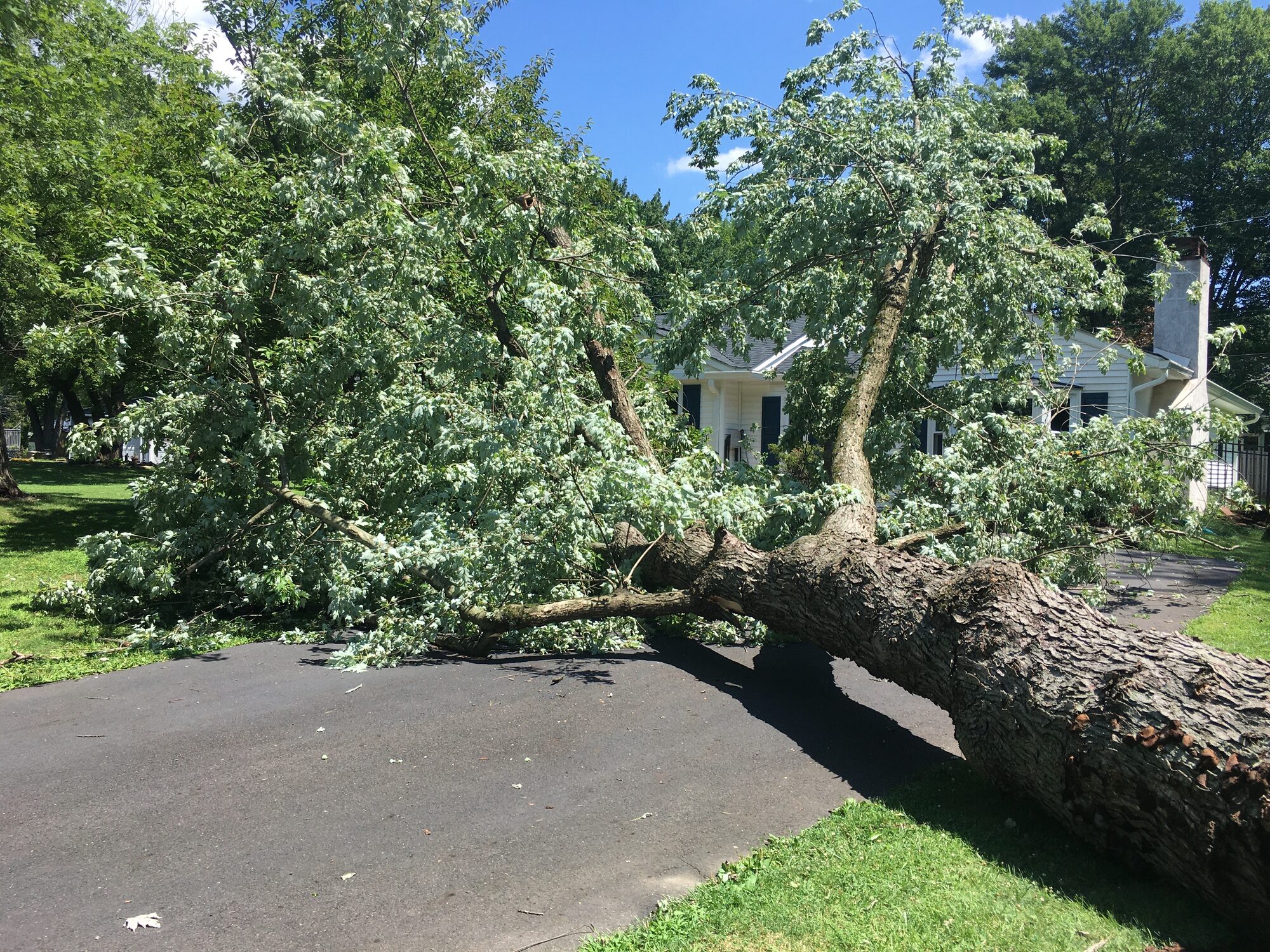
Sudden lean, gradual lean, or new lean after a storm
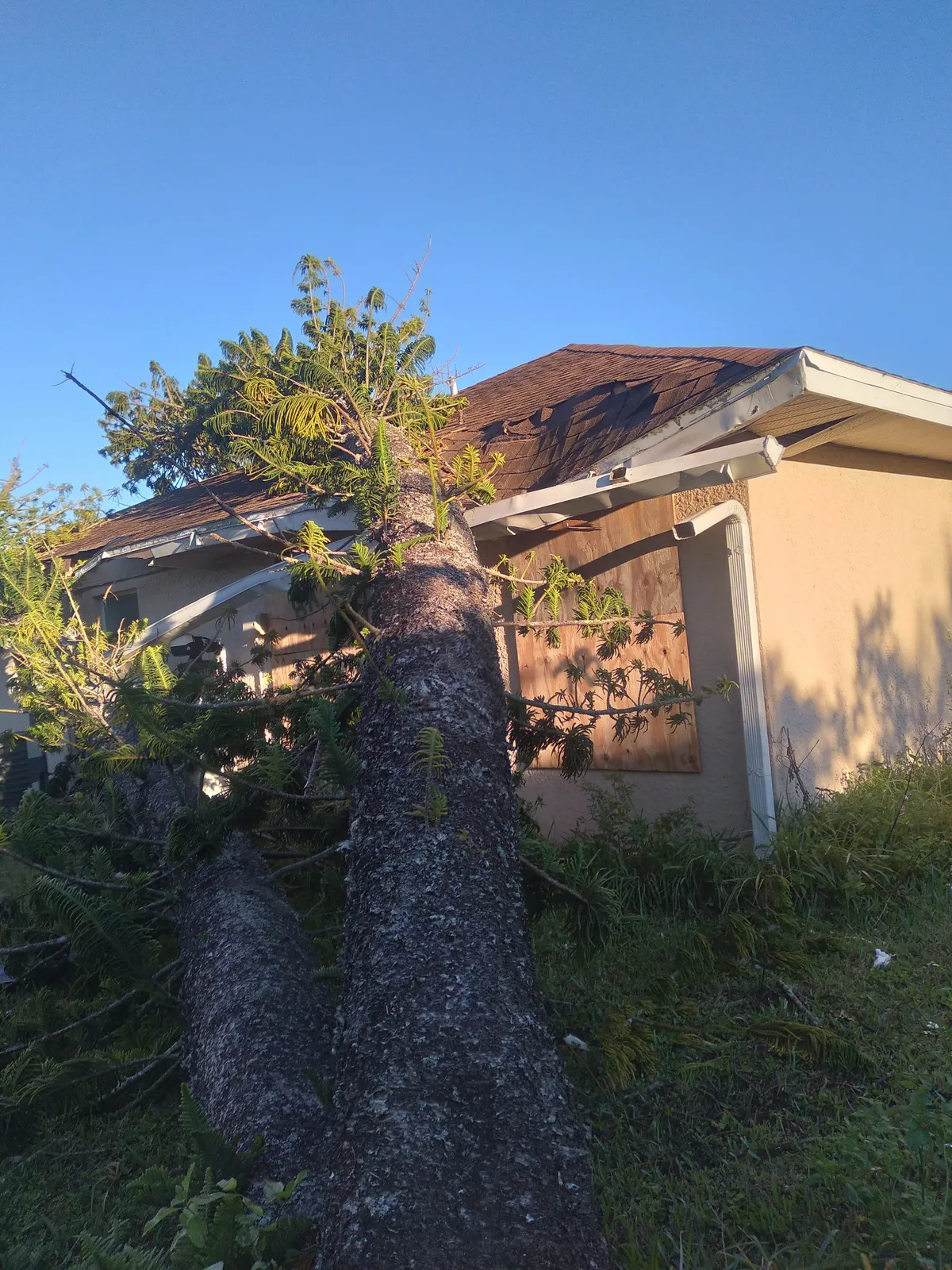
Split trunks, hangers, and partial blowdowns
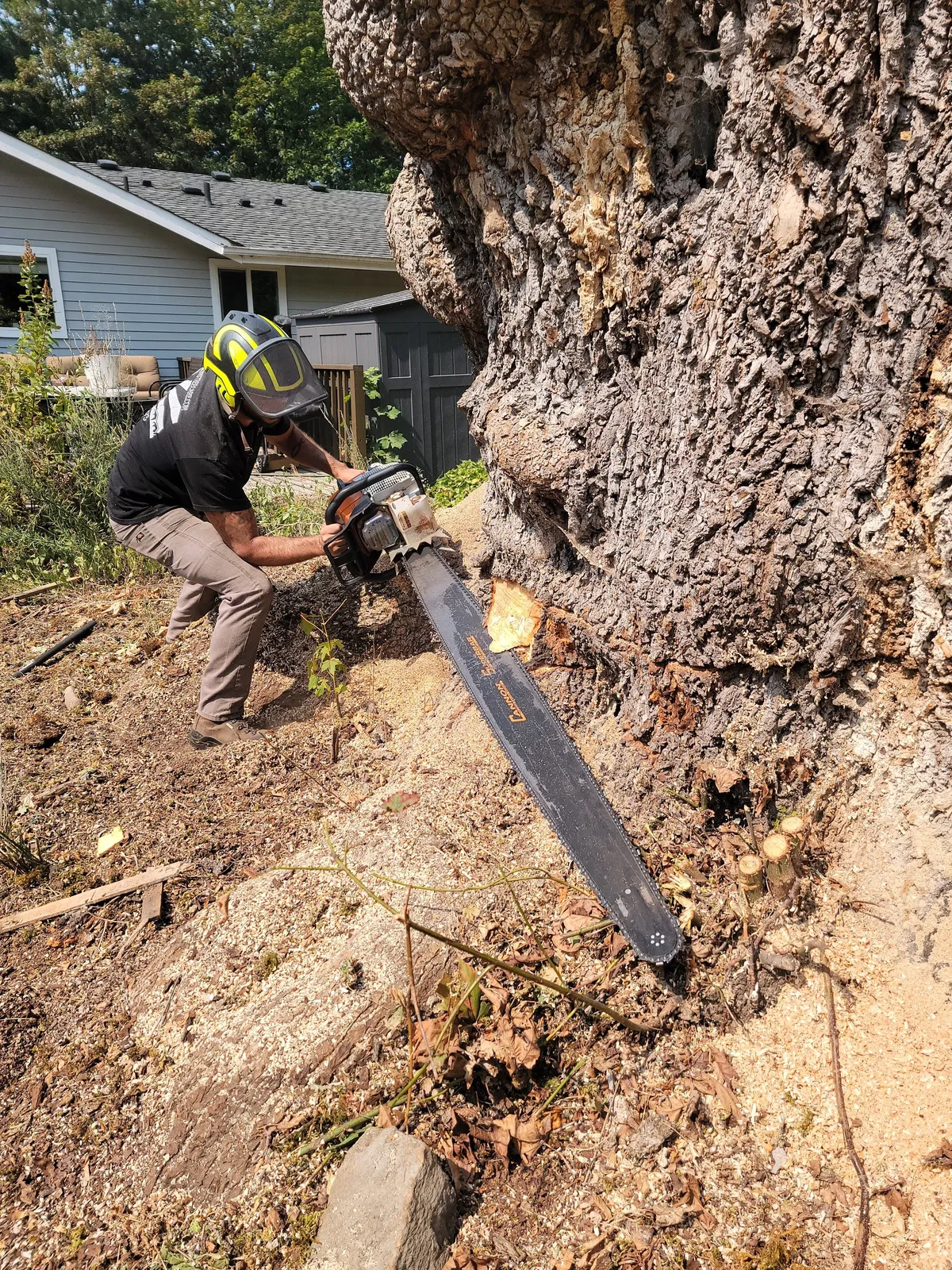
Vertical cracks, included bark, and failing leaders
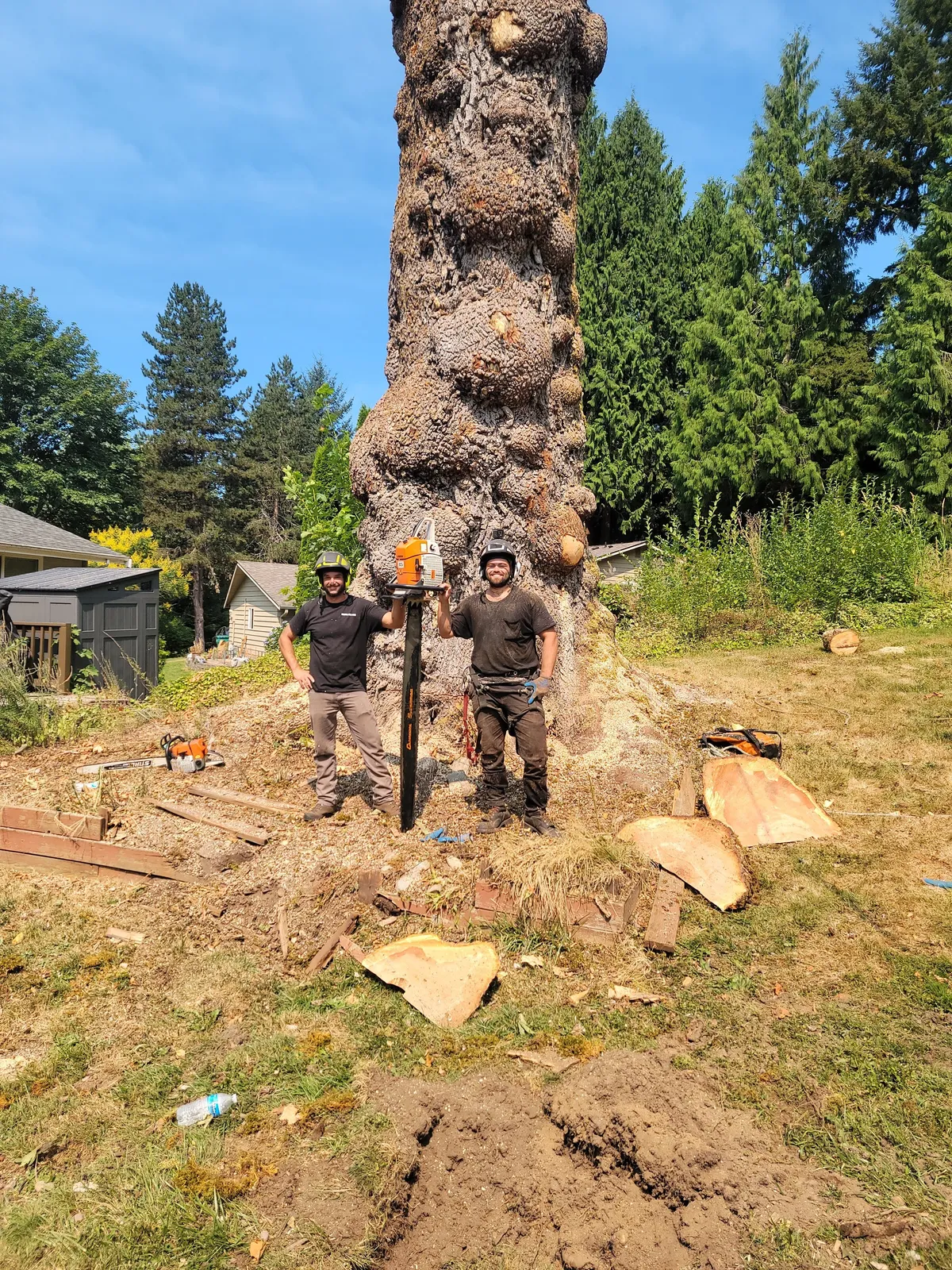
Standing deadwood, top dieback, and declining canopies
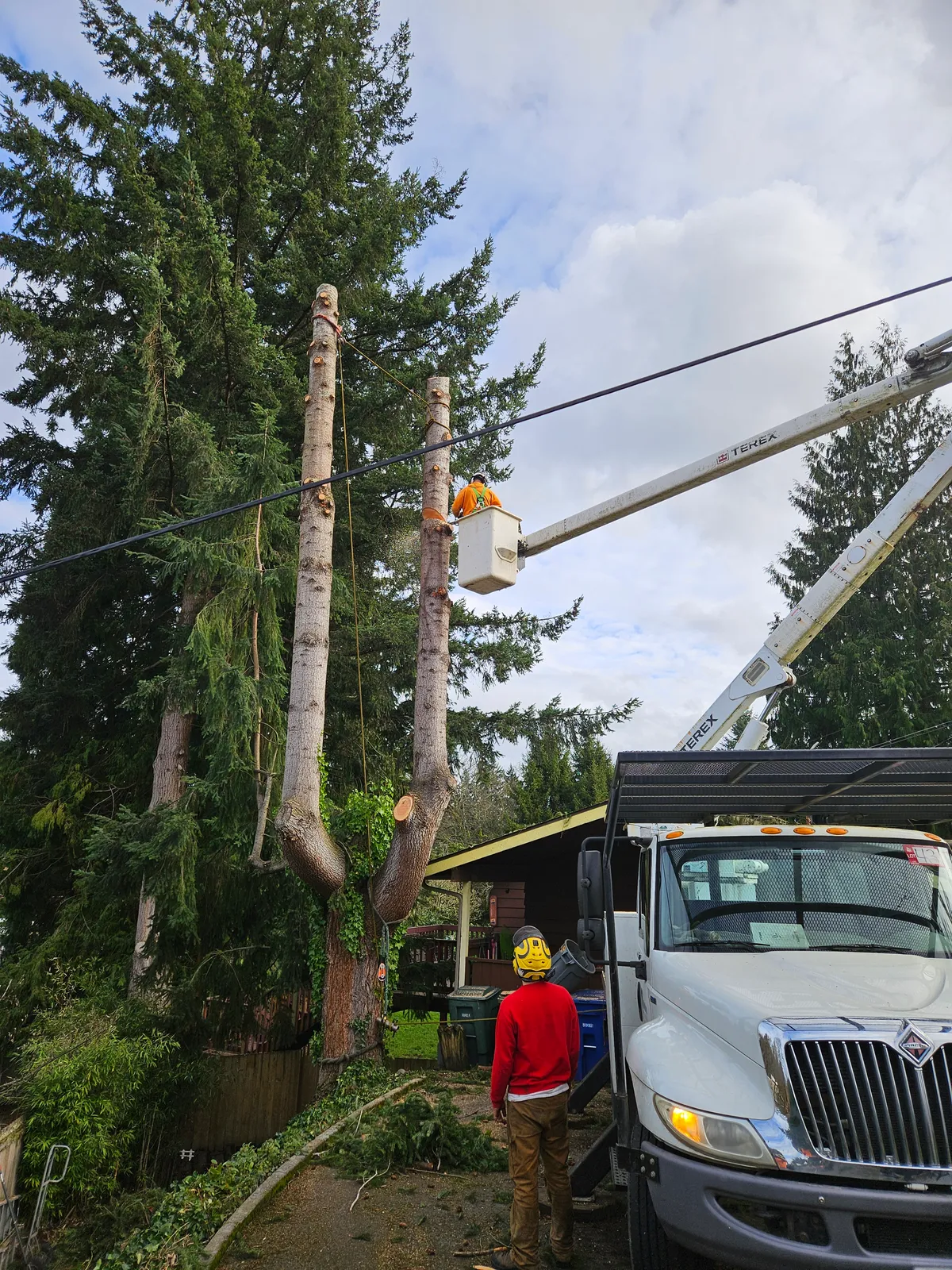
Trees and limbs threatening overhead service lines
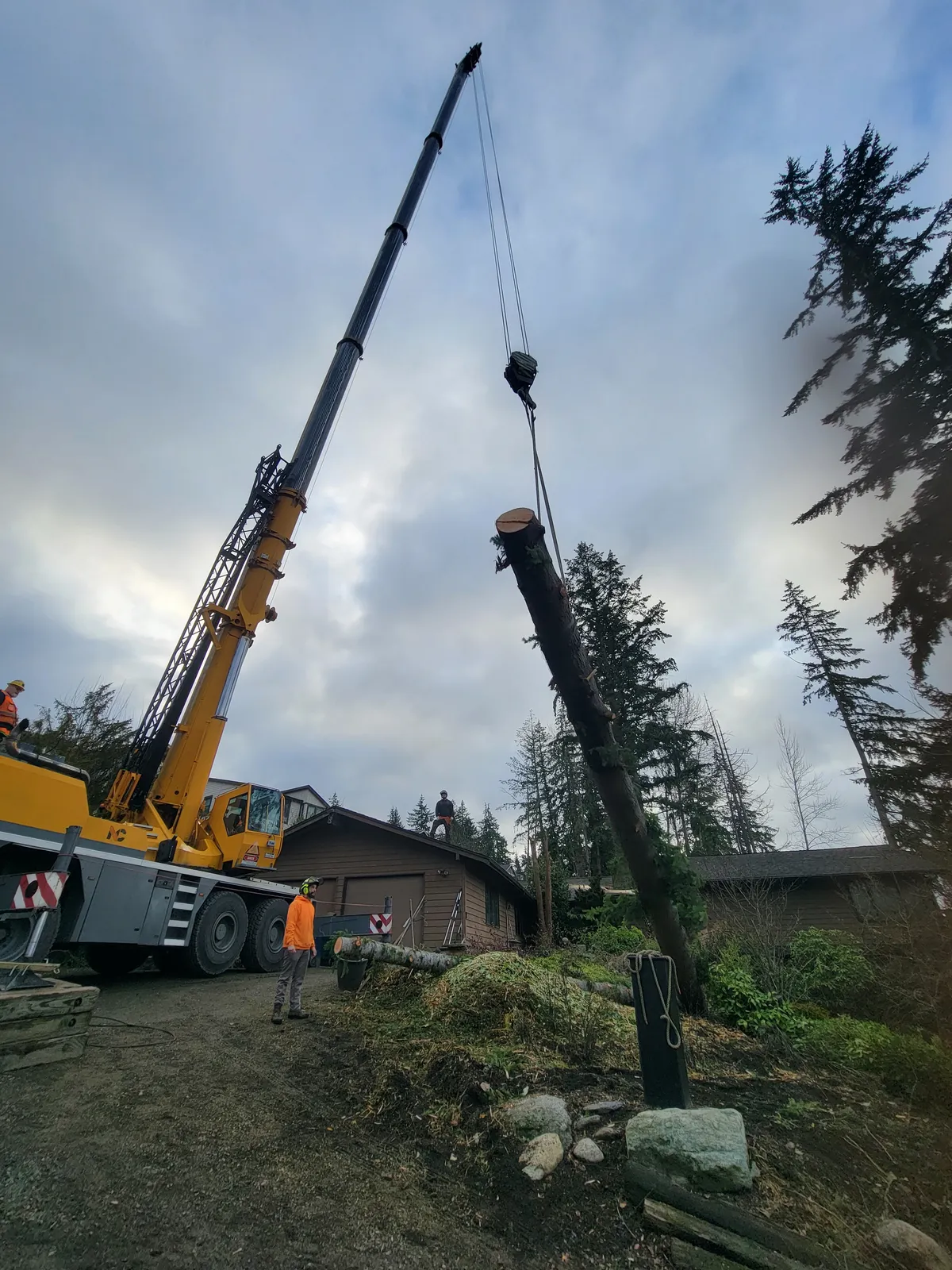
Compromised trees lifted out section by section
A look at recent emergency and hazard tree jobs across the valley.
Controlled felling of a compromised tree
Snoqualmie Valley
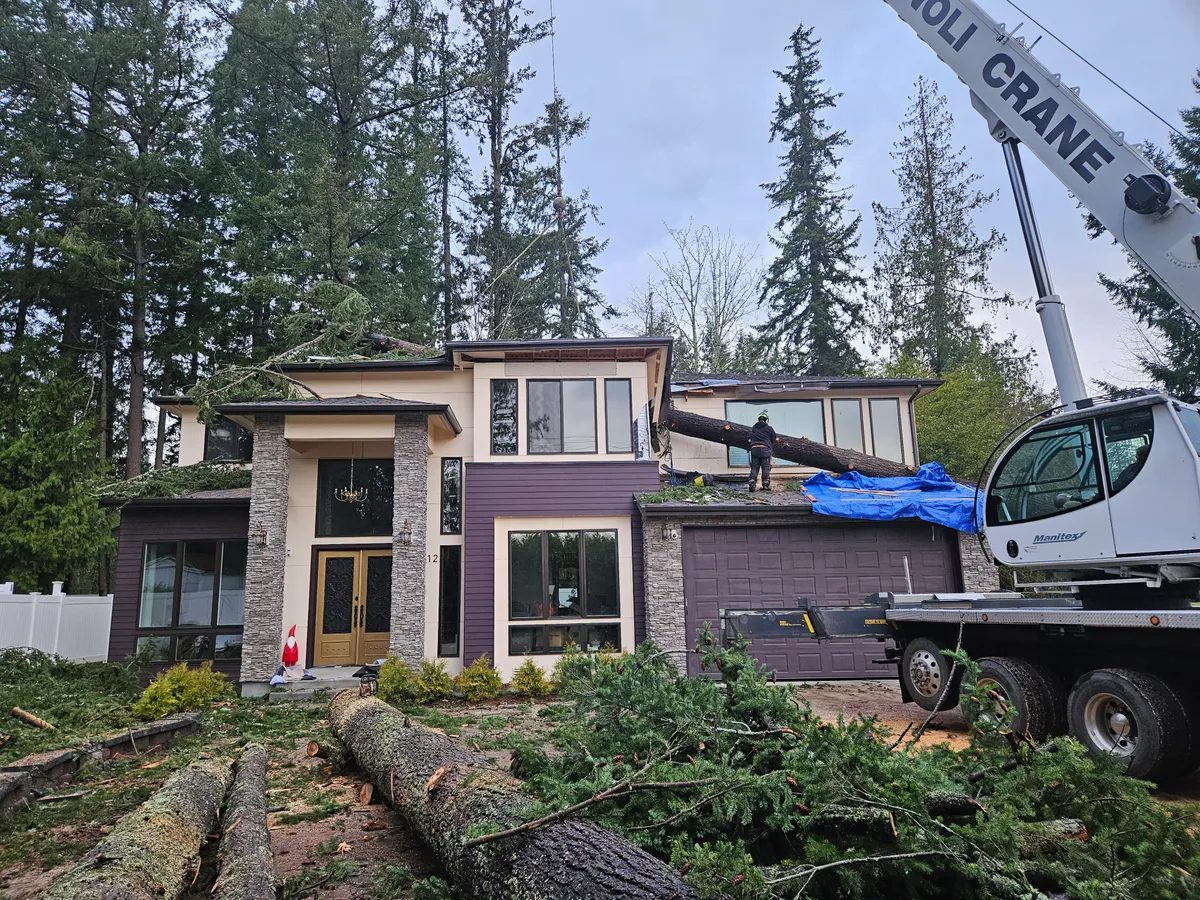
Tree on the home
Fall City, WA
Leaning trunk, structural lean
Redmond, WA
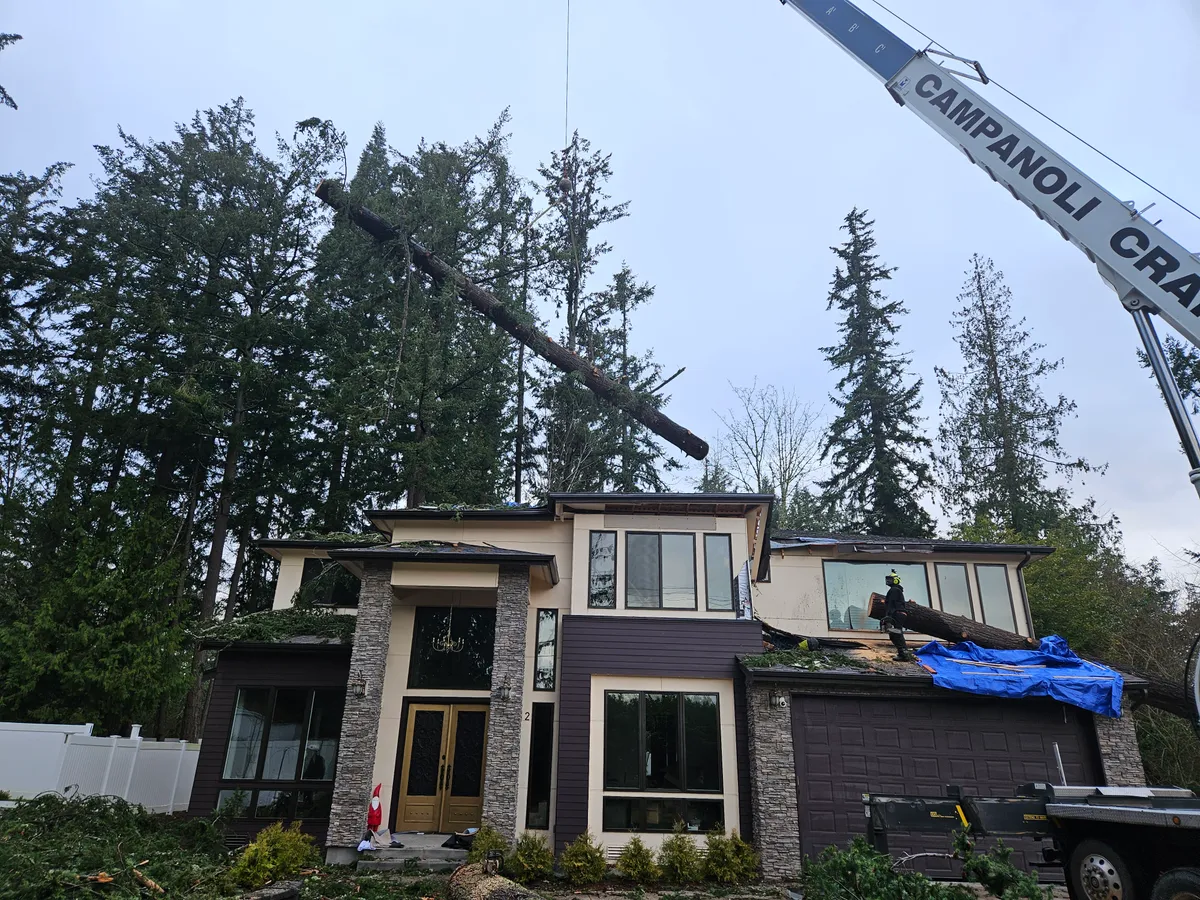
Crane-assisted hazard removal
Powerline hazard cleared
Crane lift, section by section
Carnation, WA
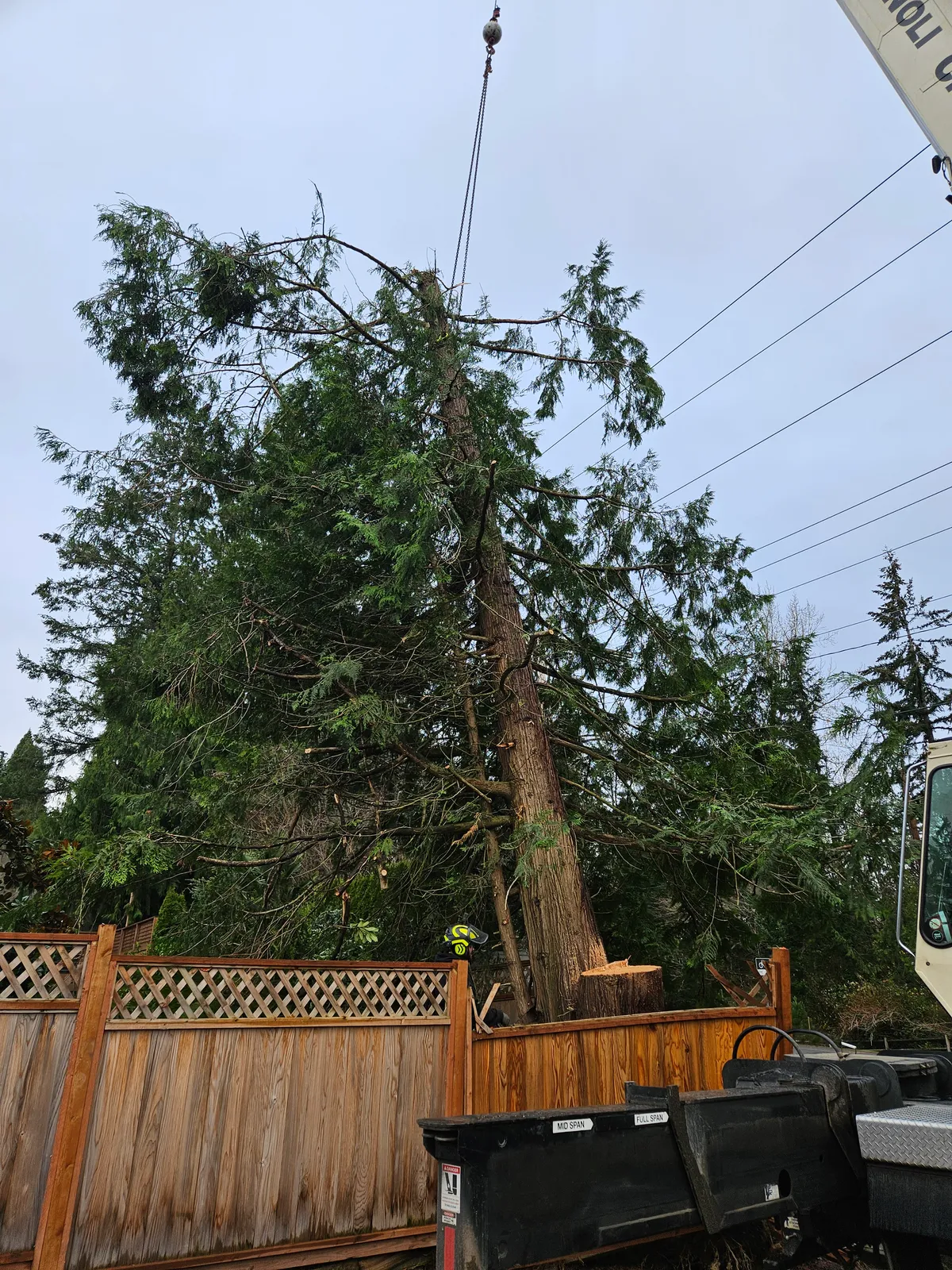
Rigged for safe lift
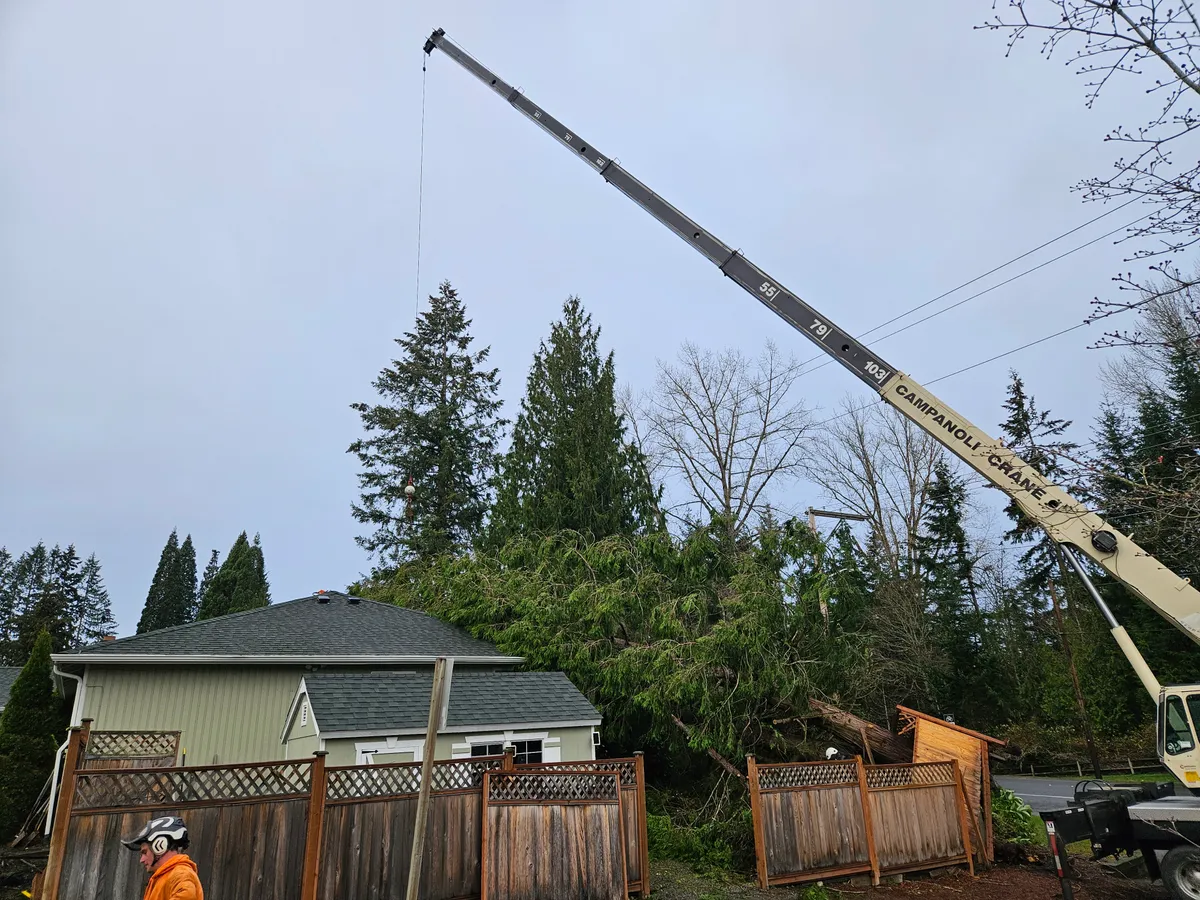
Crane staged tight to the structure
Storm damage cleared, dangerous trees down, properties restored.
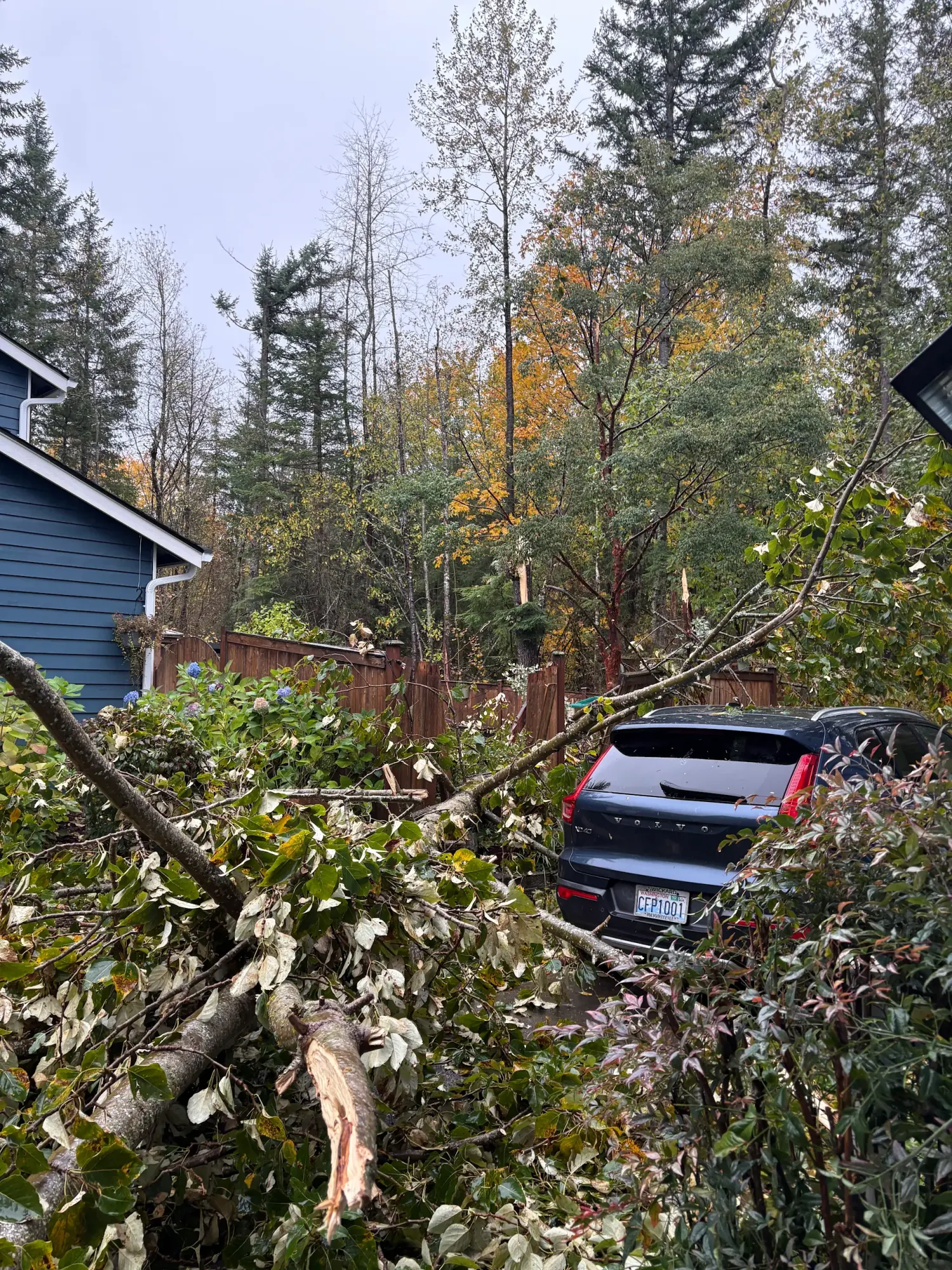 Before
 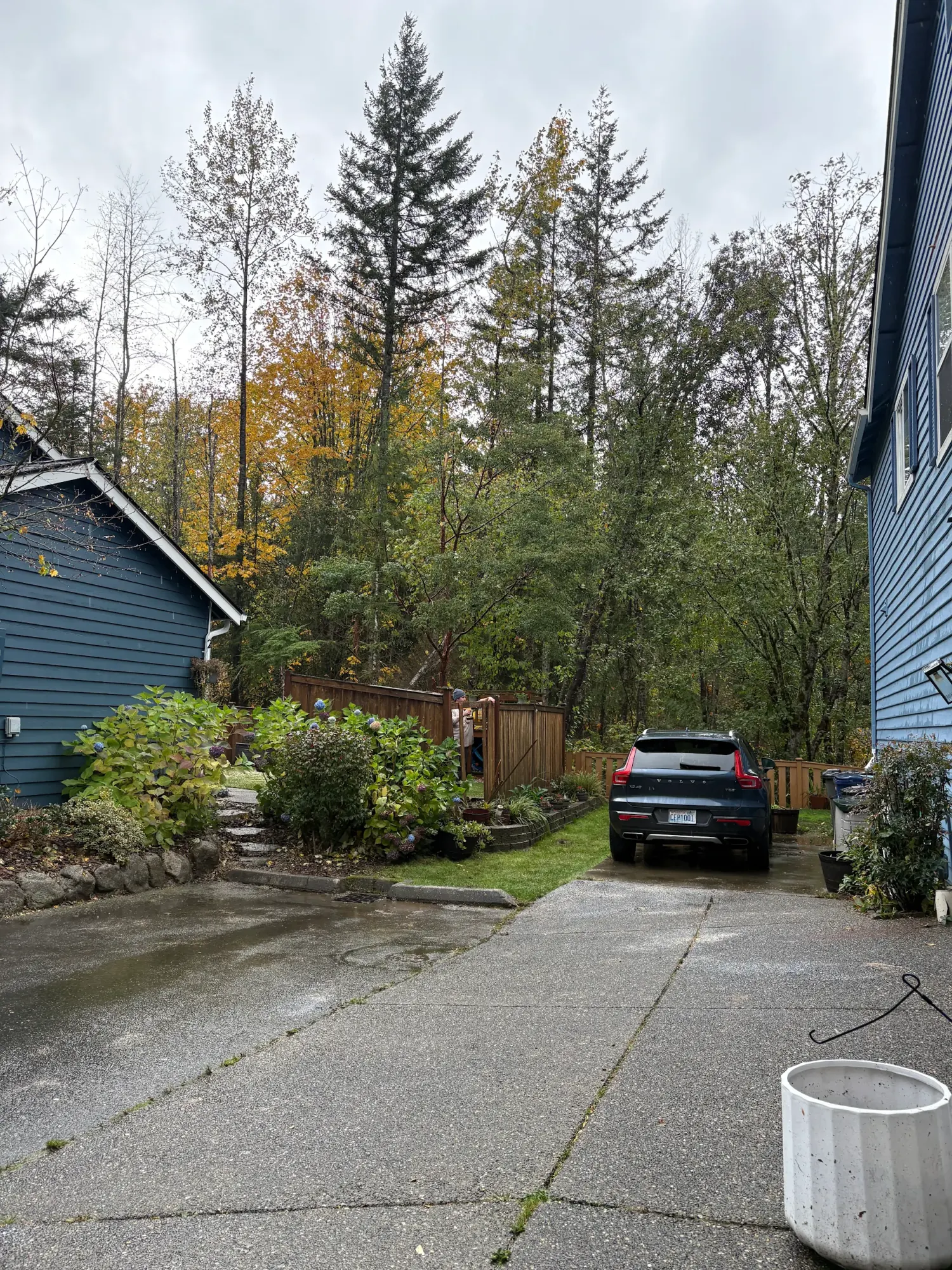 After
After Storm damage emergency response — Duvall, WA
Before 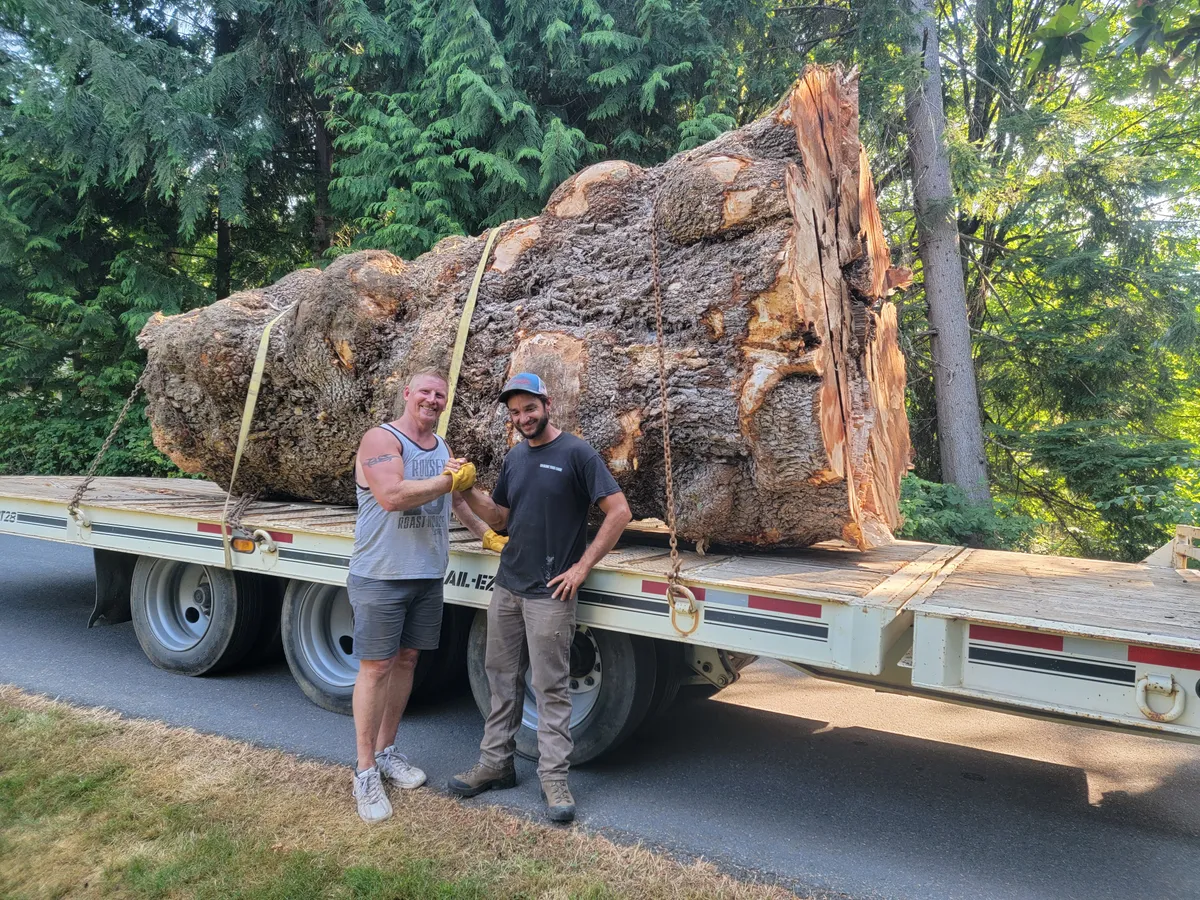 After
After Declining old-growth cedar — Carnation, WA
 Before
  After
After Crane-assisted hazard removal — Woodinville, WA
Certain species are more likely to become hazardous in our valley — by their wood properties, their age, or the local conditions stressing them. Here is what we watch for.
King County's own native plant guide warns to keep cottonwood away from structures because it is known to break. It grows fast — often more than four feet a year — and the wood turns brittle as the tree matures.
Aging red alder stands are reaching the end of their natural life across the valley. Sixty years is about the limit, and the wood weakens quickly toward the end.
Cedar dieback is an active forest-health concern across western Washington. WSU and Washington DNR have documented thinning canopies, top dieback, and flagging branches tied to warmer, drier summers.
Bigleaf maple decline has been documented across western Washington since around 2010 — yellow flagging of large branches, partial to full crown dieback, and reduced leaf size. Hits trees near roads and development harder.
Even drought-tolerant uplanders like Douglas fir suffer progressive root decline on lower-valley properties after repeated flooding. Watch for needle drop, top dieback, and lean.
Valley wind storms from October through March find the weak spots. Trees that look fine after a storm can have hidden cracks, root damage, or hangers that show up days or weeks later.
A working knowledge of the Pacific Northwest is part of doing this job right here. If you have a tree you are unsure about, an honest assessment from an experienced arborist is the cheapest insurance you can buy.
From your first call to final cleanup, we move fast and we move safely.
For active hazards, call us directly — 24/7. For non-urgent assessments, the online form works too.
Brock comes out, looks at the lean, root condition, structural defects, and proximity to structures and lines. You get an honest read on actual risk.
Our crew uses the right approach — climb, crane, or controlled drop — to bring the tree down without damage to your property.
All debris hauled away, yard raked clean. We restore the area as much as we can after an emergency.
The most common questions we get about hazard tree removal.
Call us 24/7 or fill out the form for an honest, no-pressure assessment.